
Pink Ribbon Counter Displays | Breast Cancer Fundraising Displays (14)
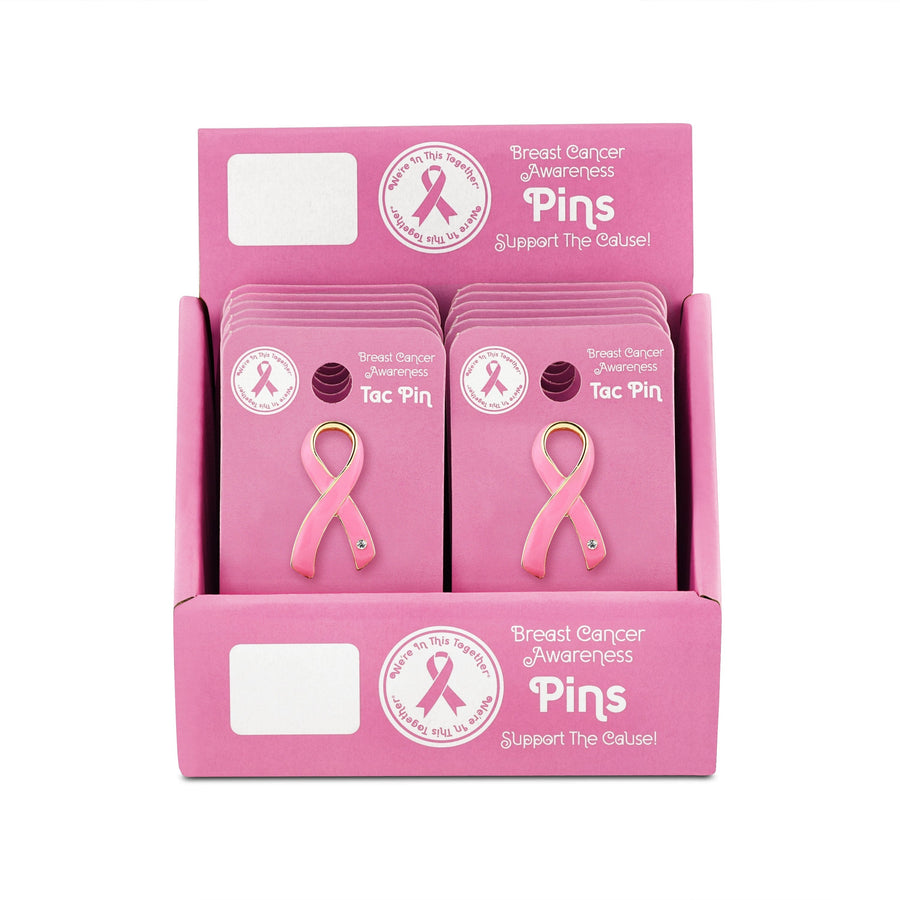
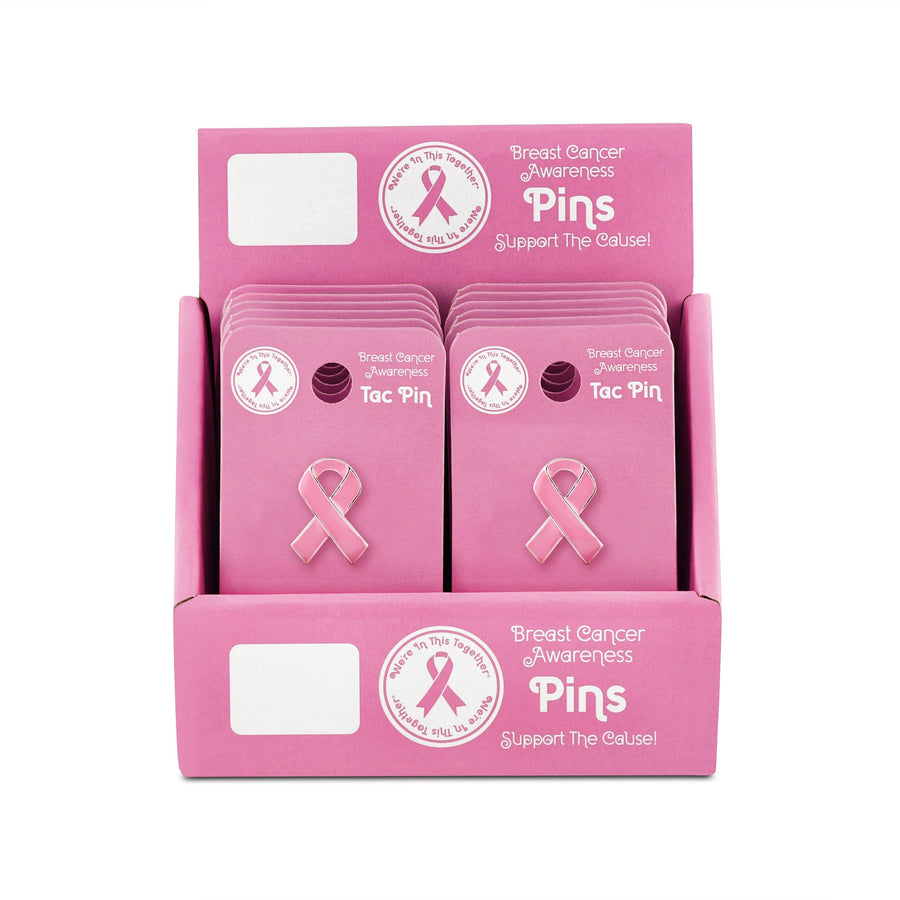
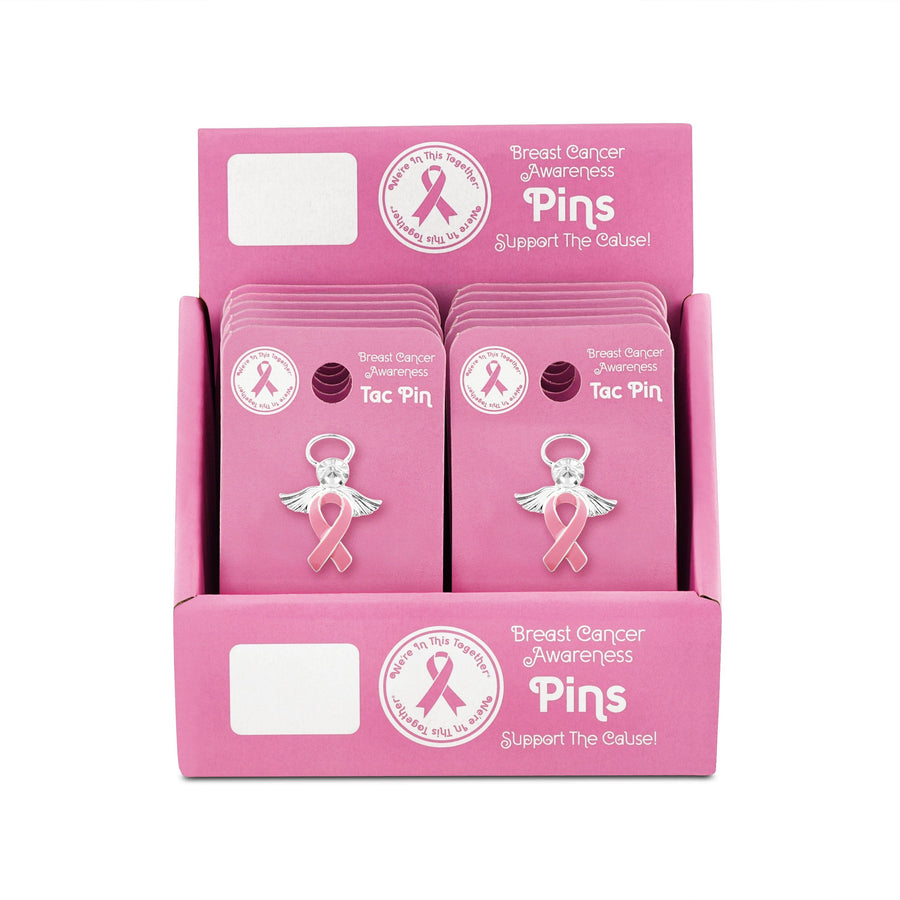
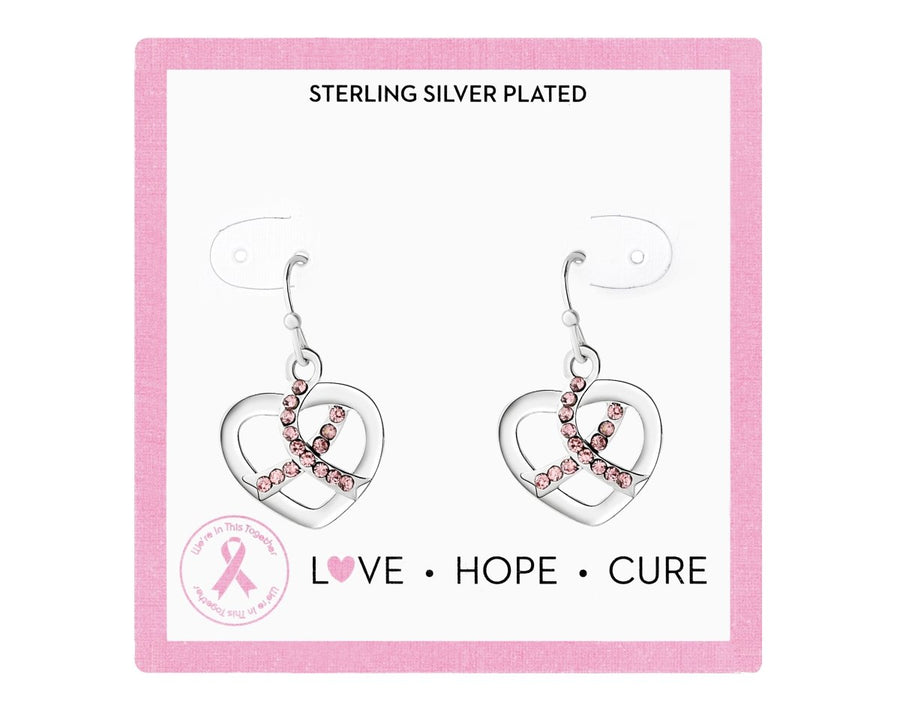
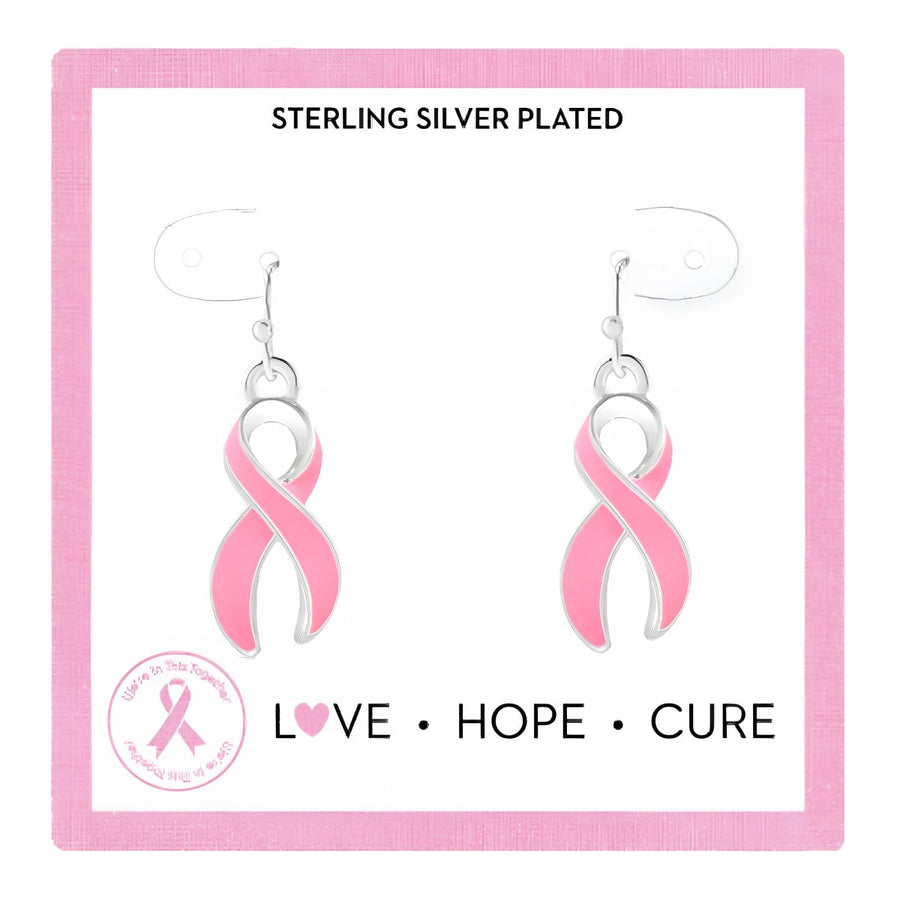
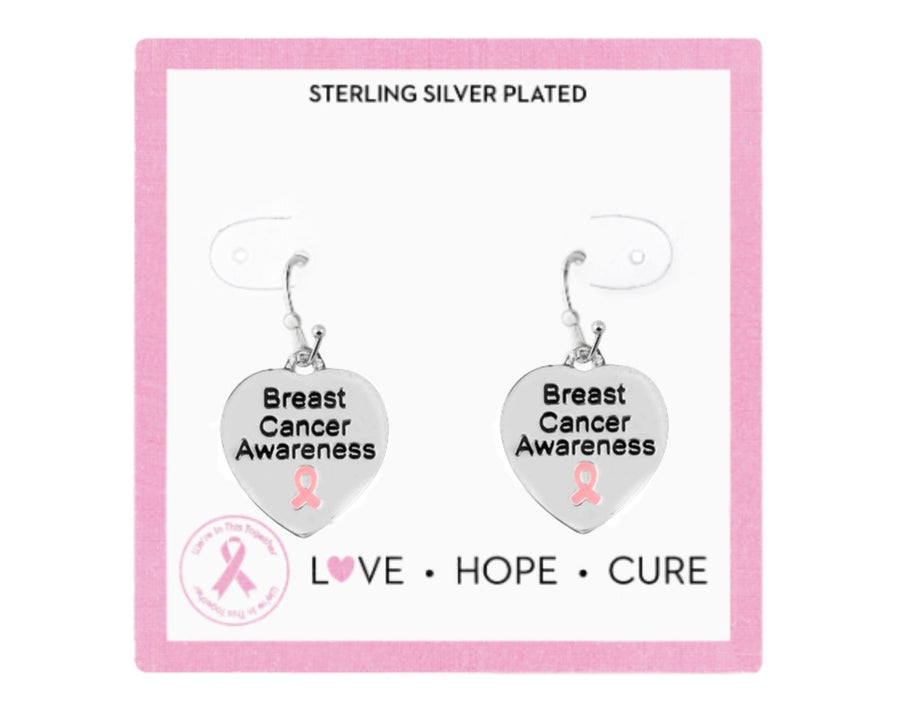
Shop pink ribbon counter displays for breast cancer awareness and fundraising. These ready-to-use displays feature breast cancer awareness pins, bracelets, earrings, and other pink ribbon products arranged for easy countertop or tabletop presentation. Use them at retail counters, event tables, school offices, medical offices, fundraisers, nonprofit events, community programs, and Breast Cancer Awareness Month activities.




Loading more products...
Breast Cancer Awareness Counter Displays
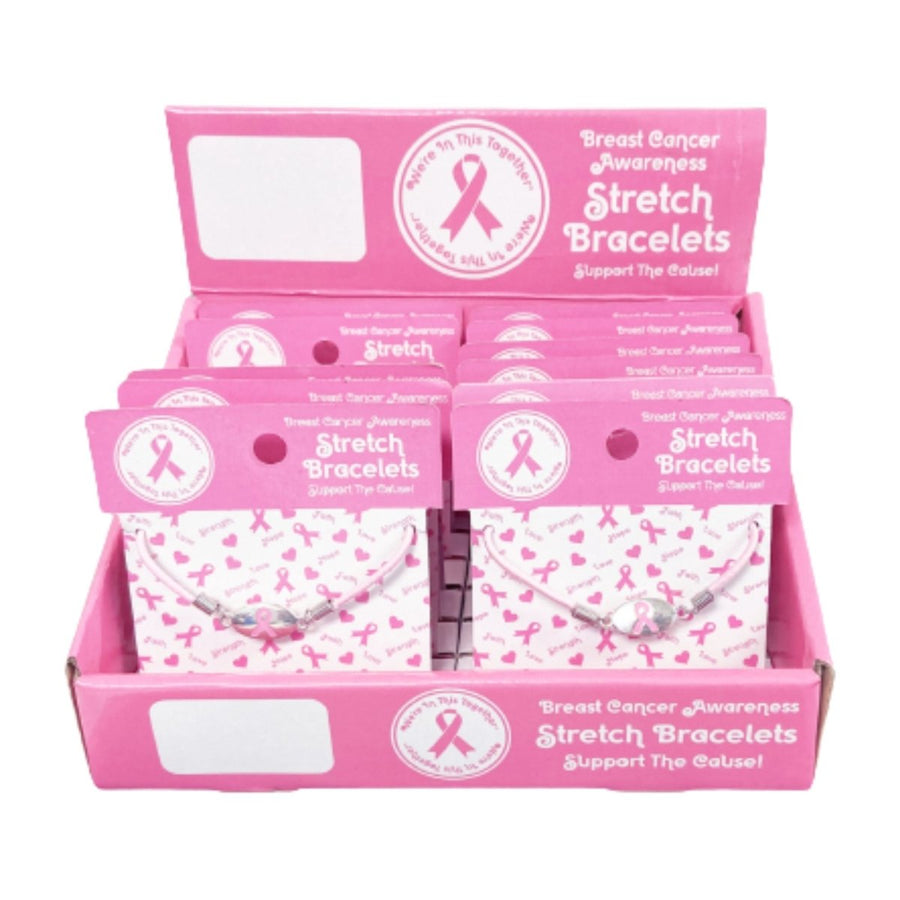
Pink ribbon counter displays make it easy to present breast cancer awareness merchandise in a compact, organized format. Instead of setting out individual products one at a time, these displays provide a ready-made presentation for pins, bracelets, earrings, and other awareness items.
They are useful for fundraisers, retail stores, gift shops, schools, hospitals, medical offices, nonprofits, event booths, reception desks, and community awareness programs.
Pink Ribbon Displays for Fundraising & Resale
Breast cancer counter displays can be used to sell awareness merchandise, offer items for a suggested donation, or provide supporters with an easy way to choose a pink ribbon product during an event or campaign.
- Place displays on checkout counters or reception desks
- Use them at breast cancer walks and fundraising events
- Display awareness merchandise in retail stores and gift shops
- Set them up at school, workplace, or nonprofit events
- Use them for Breast Cancer Awareness Month campaigns in October
Pink Ribbon Pin & Bracelet Counter Displays
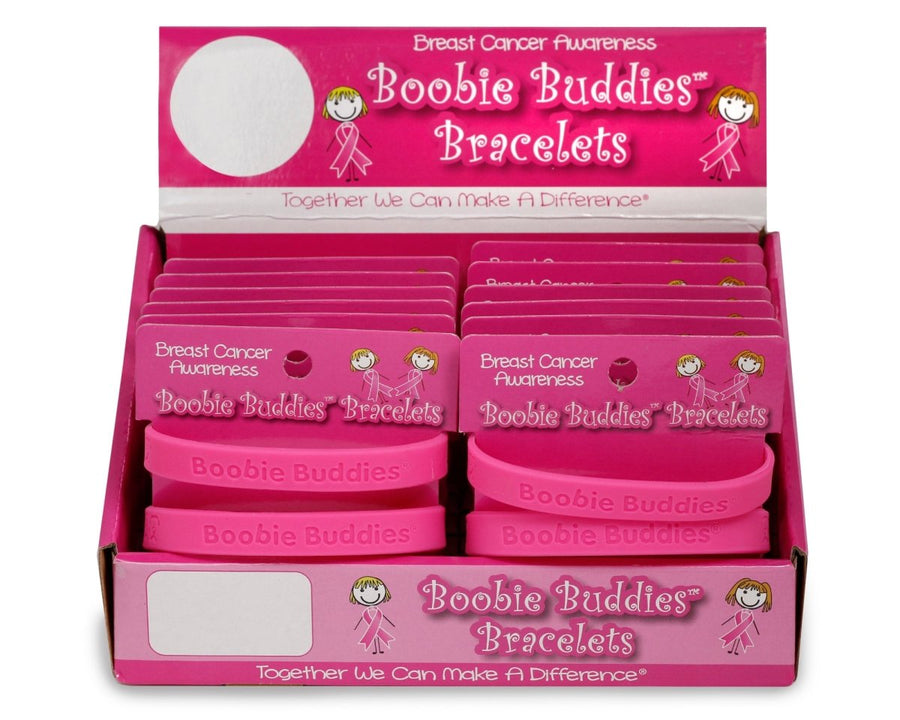
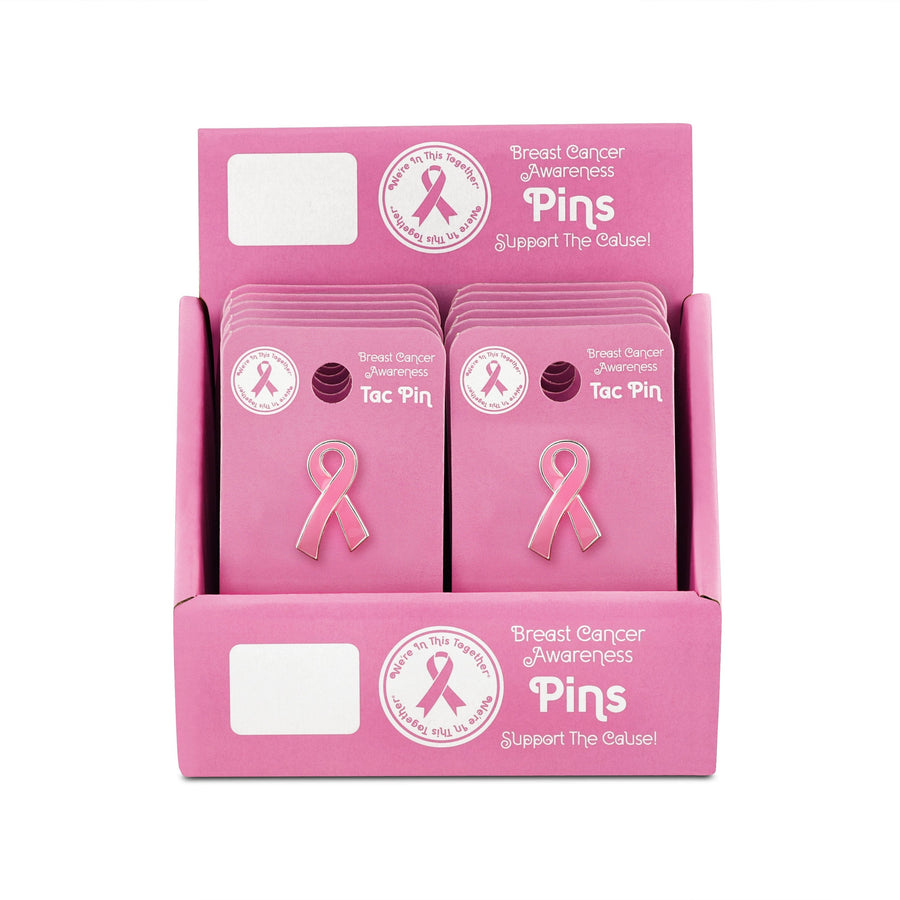
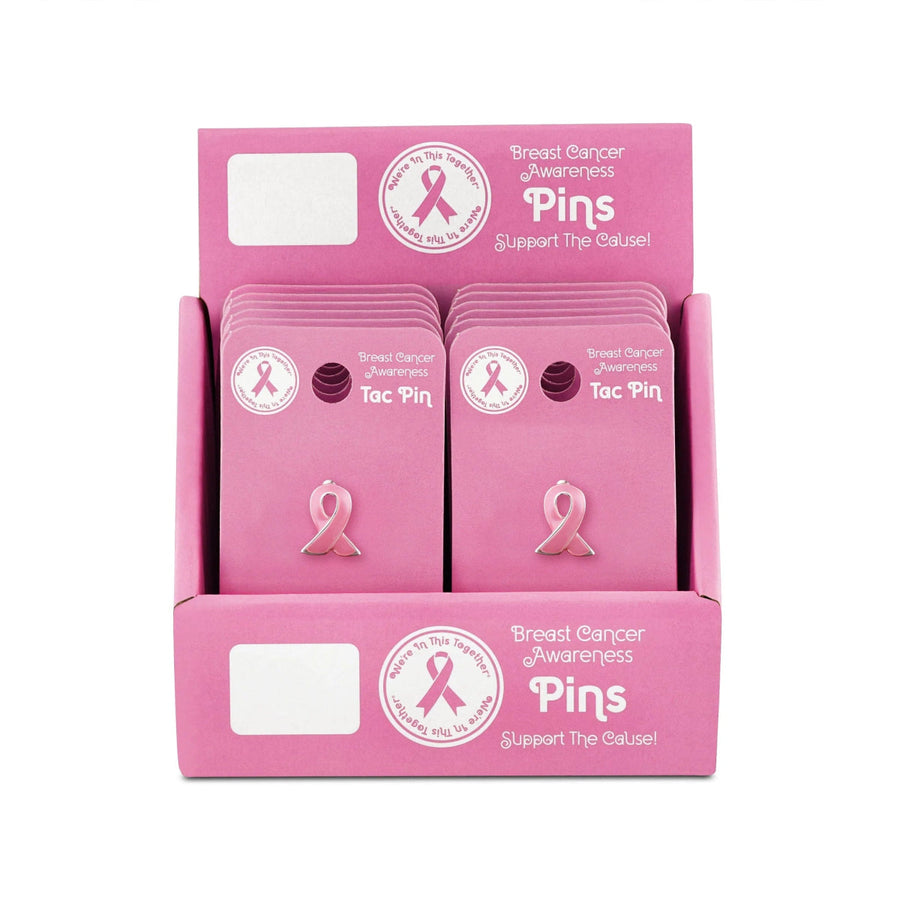
This collection includes several styles of breast cancer awareness counter displays, including pink ribbon pin displays and silicone bracelet displays. Individual product pages list the exact number of display cards, products included, dimensions, materials, and other specifications.
Some displays include 12 cards with awareness pins, while bracelet displays may include multiple bracelets per card. Check each product page for the exact contents of the display you are purchasing.
Where to Use Breast Cancer Counter Displays
Counter displays work especially well in places where supporters can easily see and select awareness merchandise.
- Retail checkout counters
- Hospital and medical office reception areas
- School offices and event tables
- Nonprofit and charity fundraising booths
- Church and community events
- Workplace awareness campaigns
Pink Ribbon Counter Display Frequently Asked Questions
What is included in a pink ribbon counter display?
The contents vary by product. Some displays feature breast cancer awareness pins, while others include silicone bracelets or other pink ribbon merchandise. Check the individual product page for the exact number of cards and products included.
Can these counter displays be used for fundraising?
Yes. Organizations can use the displays to sell awareness products, offer them for a suggested donation, or make merchandise easily available to supporters at events and fundraising locations.
Are pink ribbon counter displays good for retail stores?
Yes. Their compact tabletop format makes them useful for checkout counters, gift shops, reception desks, and other areas where awareness merchandise can be displayed without taking up much space.
Can schools and nonprofits use breast cancer counter displays?
Yes. Schools, nonprofits, businesses, medical offices, churches, and community organizations can use them during breast cancer awareness and fundraising campaigns.
When are breast cancer counter displays most popular?
They can be used year-round, with especially strong demand leading up to and during Breast Cancer Awareness Month in October.
Also shop our breast cancer awareness pins, pink ribbon bracelets, and pink ribbon earrings for additional fundraising merchandise.